Listening, Observing, Evolving: Mara Hauser on 25N Geneva's Design Refresh
When a space works well, it’s easy to leave it alone. But the best coworking environments don’t stay stagnant, they listen, observe, and evolve alongside the people who use them every day. At 25N, that meant taking a fresh look at our founding Geneva location and asking, “in what ways can this serve our community even better?”
Led by Mara Hauser, founder of 25N Coworking and Workplace Studio, the goal of this update was to drive a thoughtful evolution via close observation and deep listening.
We sat down with Mara to talk about what inspired the refresh, how she approaches flow and function, and what members can take away for their own workspaces.
What inspired the new look at 25N Geneva?.
For a while, I had been observing where people naturally gravitated in space and where they didn’t. The first-floor flex area sits in a major traffic zone and right outside one of our busiest meeting rooms, which made it feel less comfortable for focused work. I wanted to reset that area so it felt more inviting and a little more tucked away, while still keeping those spontaneous interactions that are so important in a coworking space. At the same time, we needed to better define areas for heads-down work versus collaboration.
There’s also been a shift in how people like to work. Many members want to sit in open areas, but not necessarily shoulder-to-shoulder. We broke up the long tables, removed the bench seating, and added smaller individual work tables near outlets so people could plug in easily, spread out, and feel comfortable in their own space.
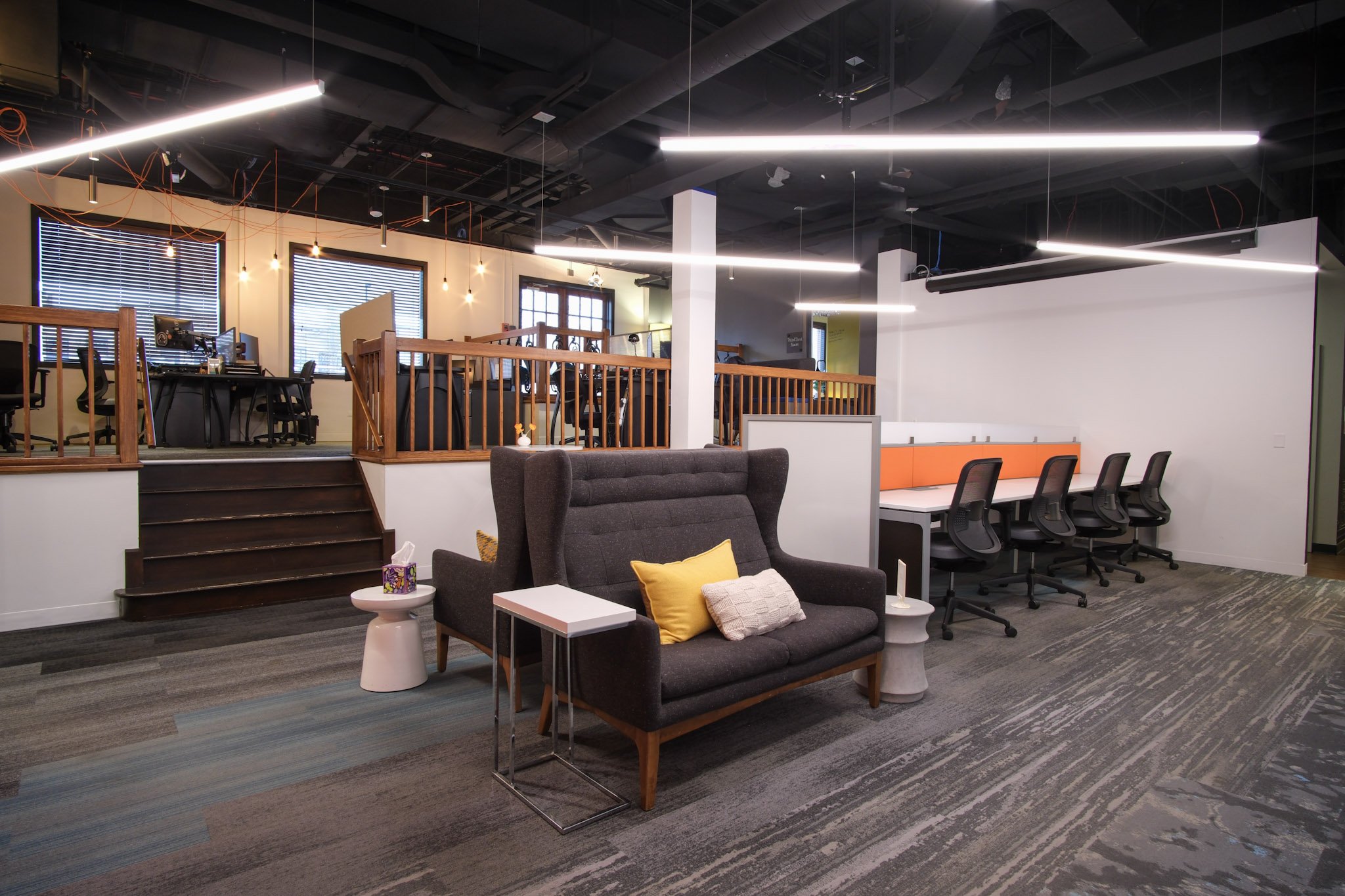
The flex space BEFORE.
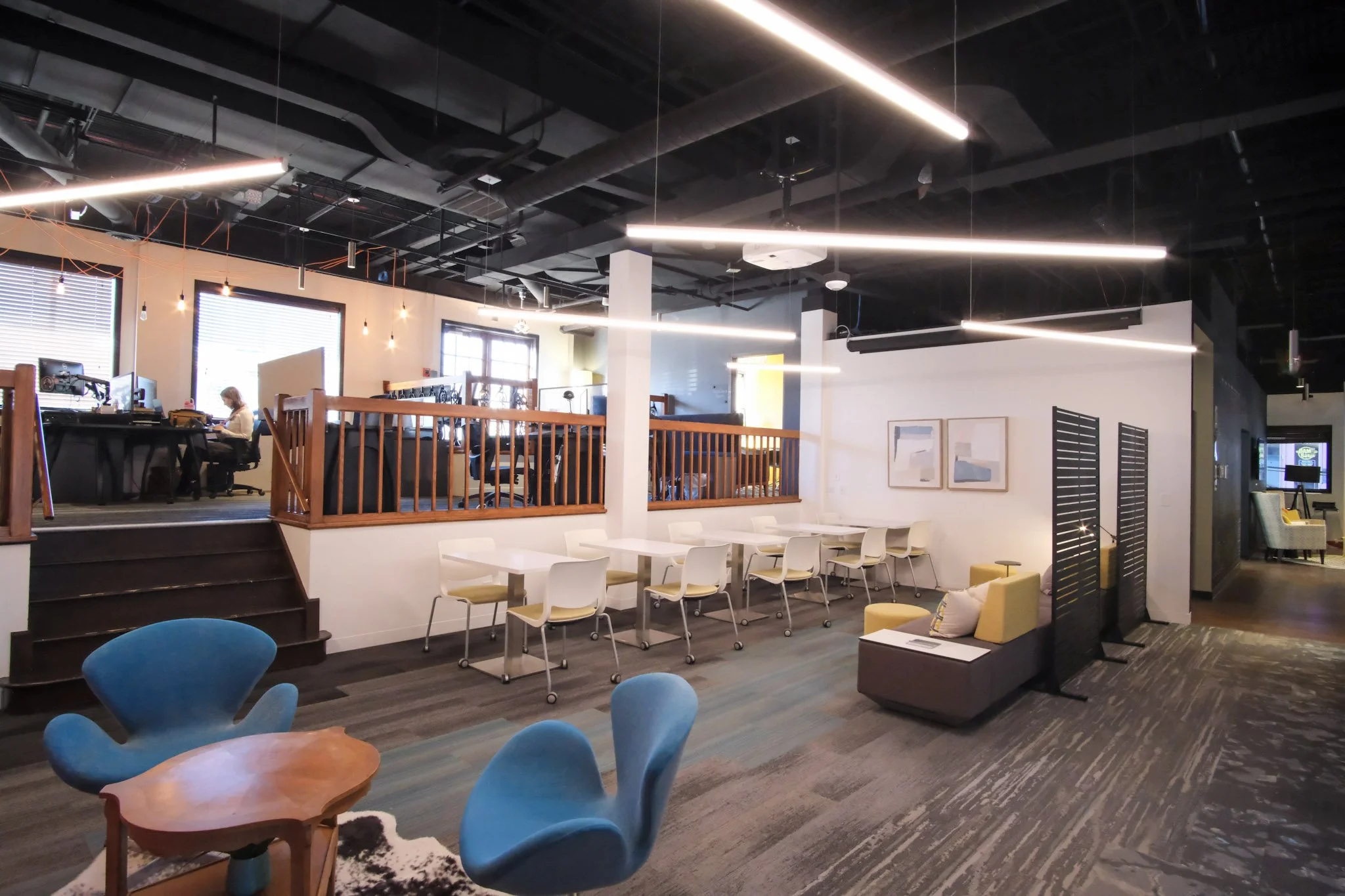
The flex space AFTER.
Another big change was in the mezzanine. There was a small lounge area with great natural light and some of our most comfortable chairs, but it was rarely used. I wasn’t sure if people felt like they were interrupting the dedicated desk area nearby. Since we’re always looking to add desks, we decided to move that lounge furniture into a more open, collaborative area and convert the mezzanine into dedicated desks. Almost immediately, both desks sold. It was a clear sign the space was ready for a change.
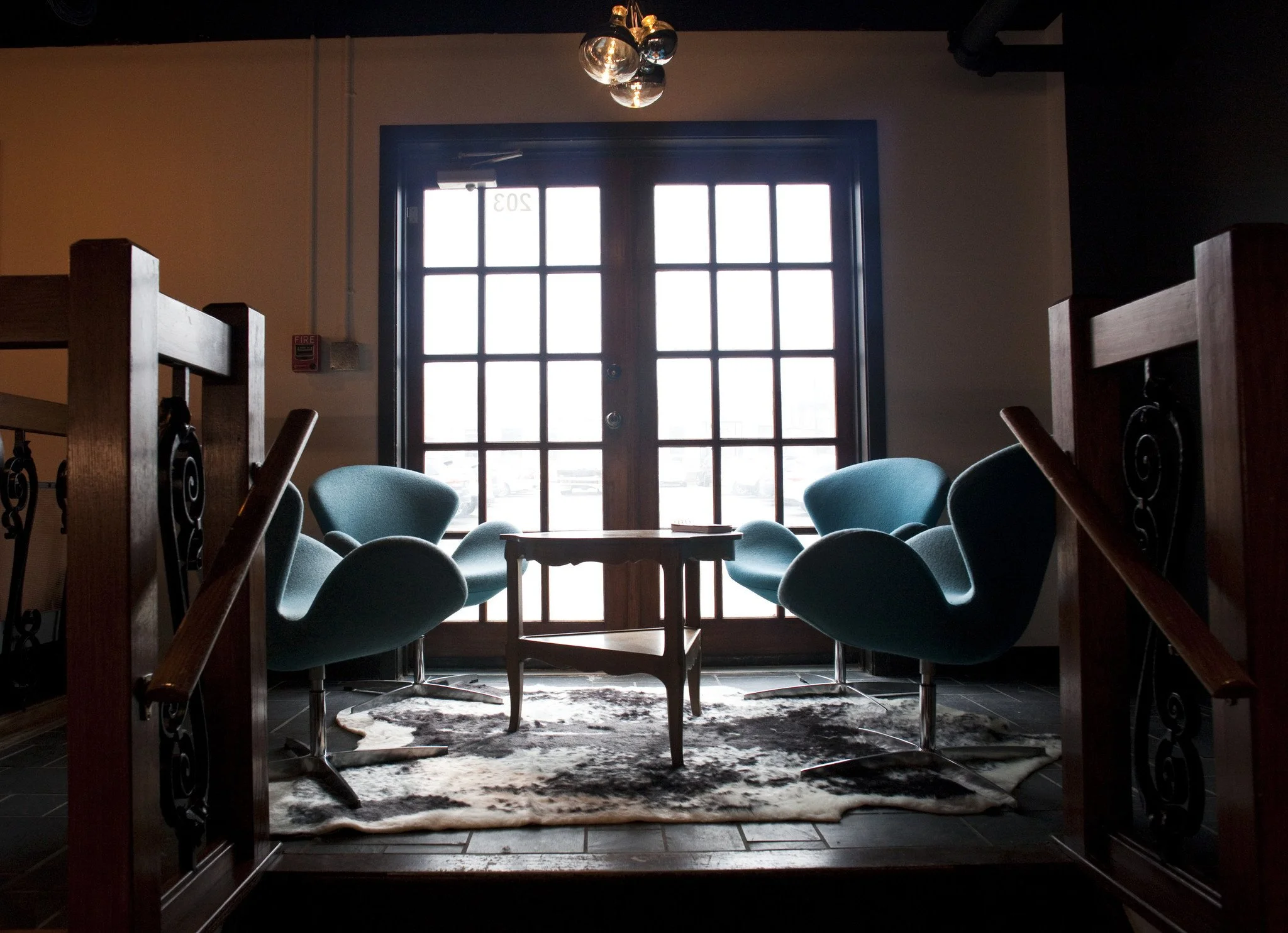
The mezzanine BEFORE.
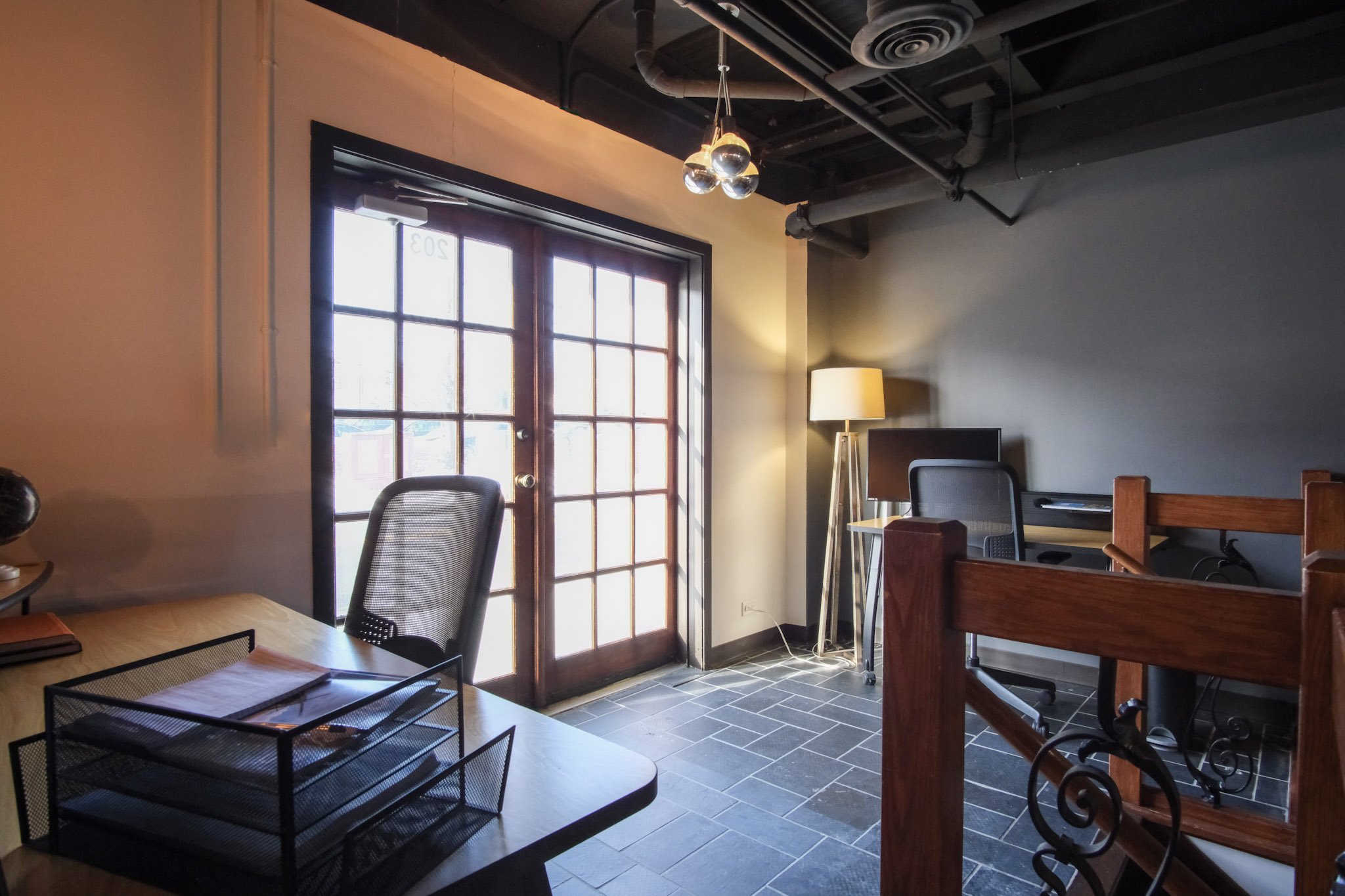
The mezzanine AFTER.
What was your vision for the Geneva refresh, and how did you keep it cohesive?
We didn’t rely on a formal storyboard for this project. Instead, Kelly Bozelka, Managing Director and Feasibility Strategist at Workplace Studio, and I walked the space together, talking through how we wanted it to feel. Our main goal was simple: to bring a greater sense of comfort and collaboration to Geneva.
Smaller footprints make it harder to create cozy nooks and crannies, but we realized there were underutilized areas we could rethink. We looked closely at what we already had, like furniture and lounge pieces that could be repurposed, and imagined how rearranging them might change how the space felt.
A lot of the process was very hands-on. We sketched ideas using trace paper and pencils, visualizing how small shifts could make a big difference. The focus was on working with existing furniture, adding art and color, cleaning up visual clutter, and making the space feel lighter and brighter without losing its original character.
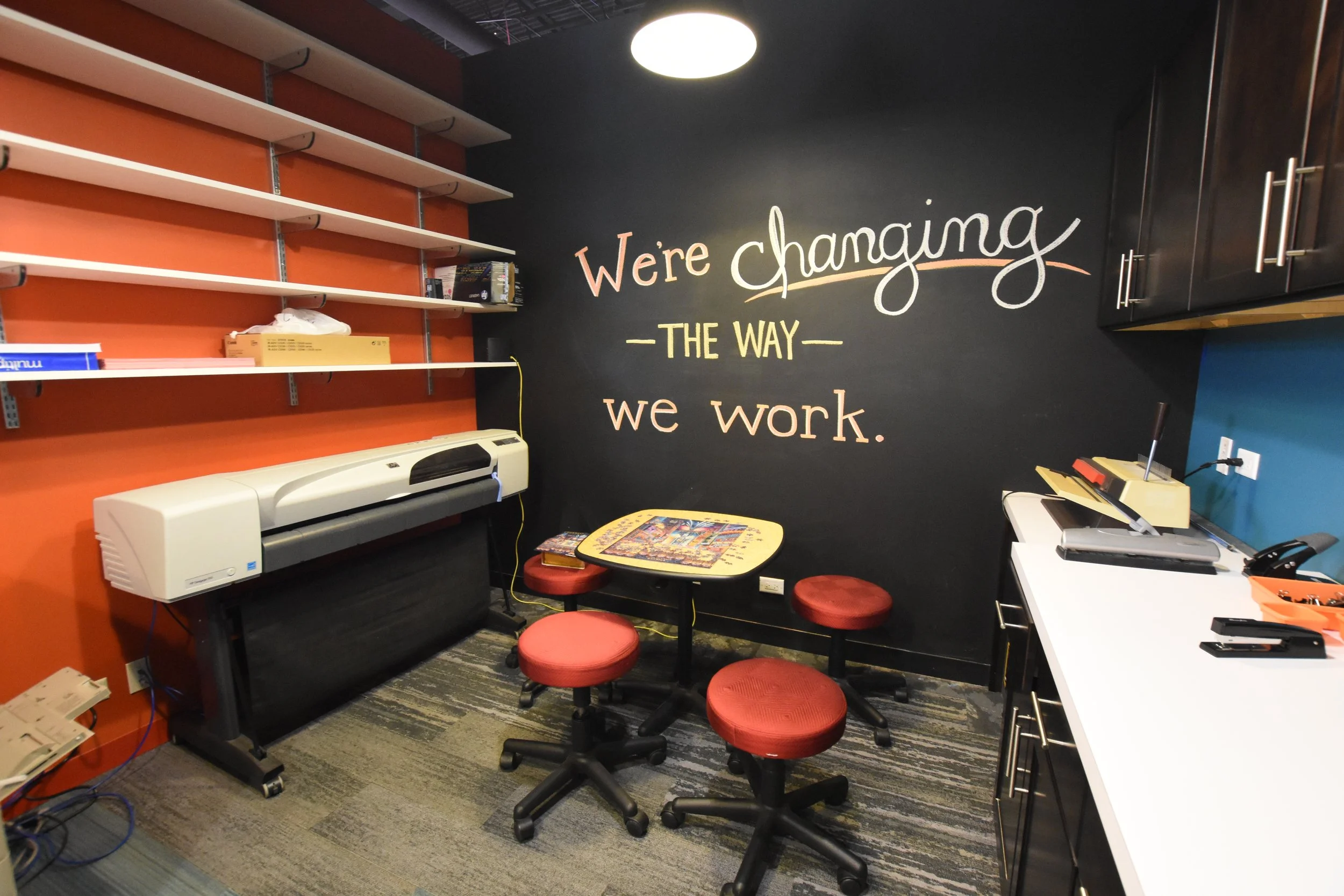
The production space BEFORE.
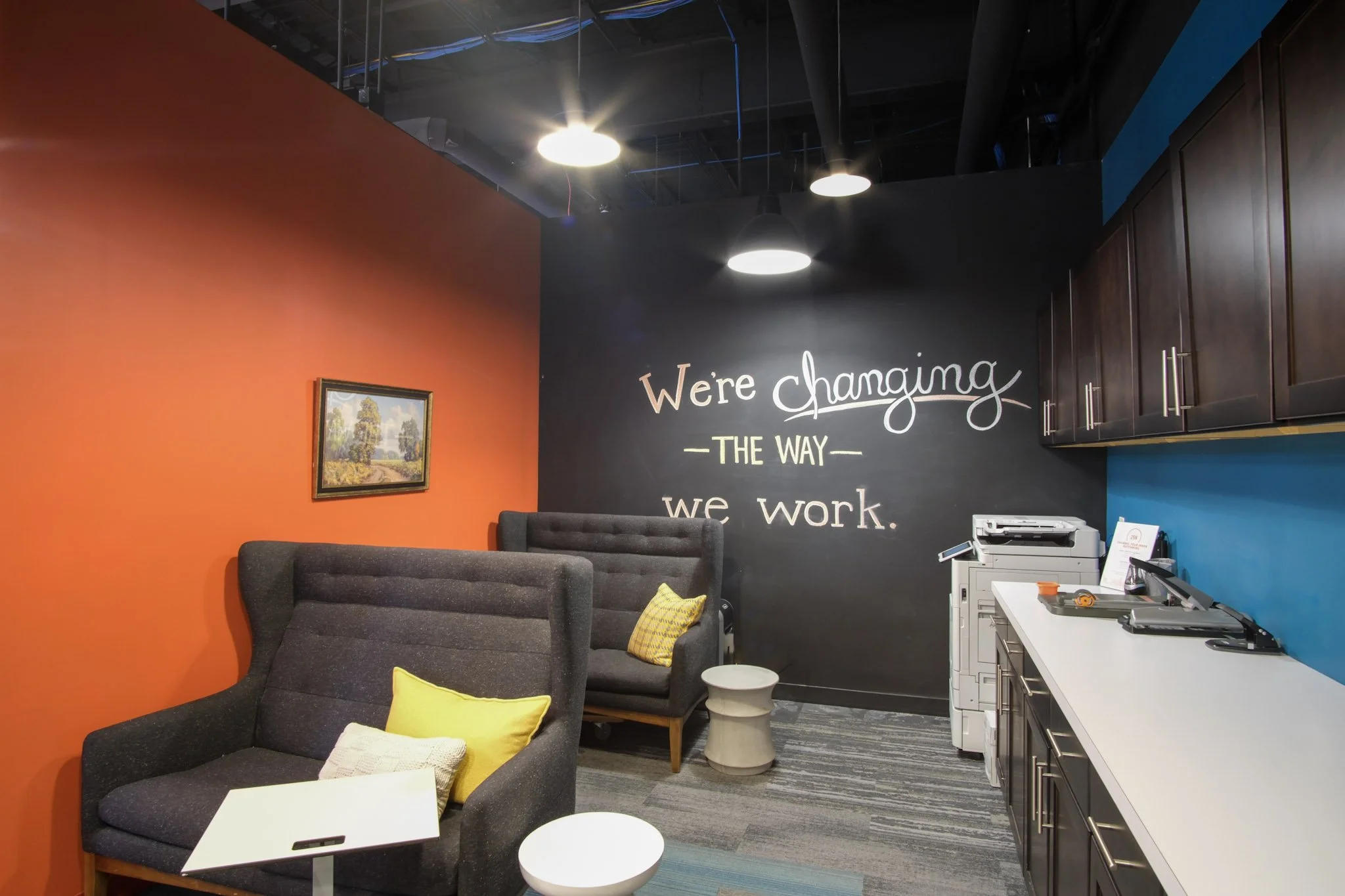
The production space AFTER.
How do you decide when a space should feel open and collaborative versus quiet and private?
You always need both. Some of that decision-making comes from observation. When you watch how people move through a space and where they choose to sit, you get real insight into what’s working. That’s research.
We realized Geneva needed more separated, heads-down work areas, even beyond what was already available upstairs. Moving away from large bench seating toward smaller, defined workspaces reflects how people are working now, and it’s been a very successful change.
At the same time, we identified collaborative furniture that wasn’t being used in its original location. Once pieces like the blue swivel lounge chairs were brought into more open areas, people naturally started using them. Understanding flow, adjacencies, and behavior is key.
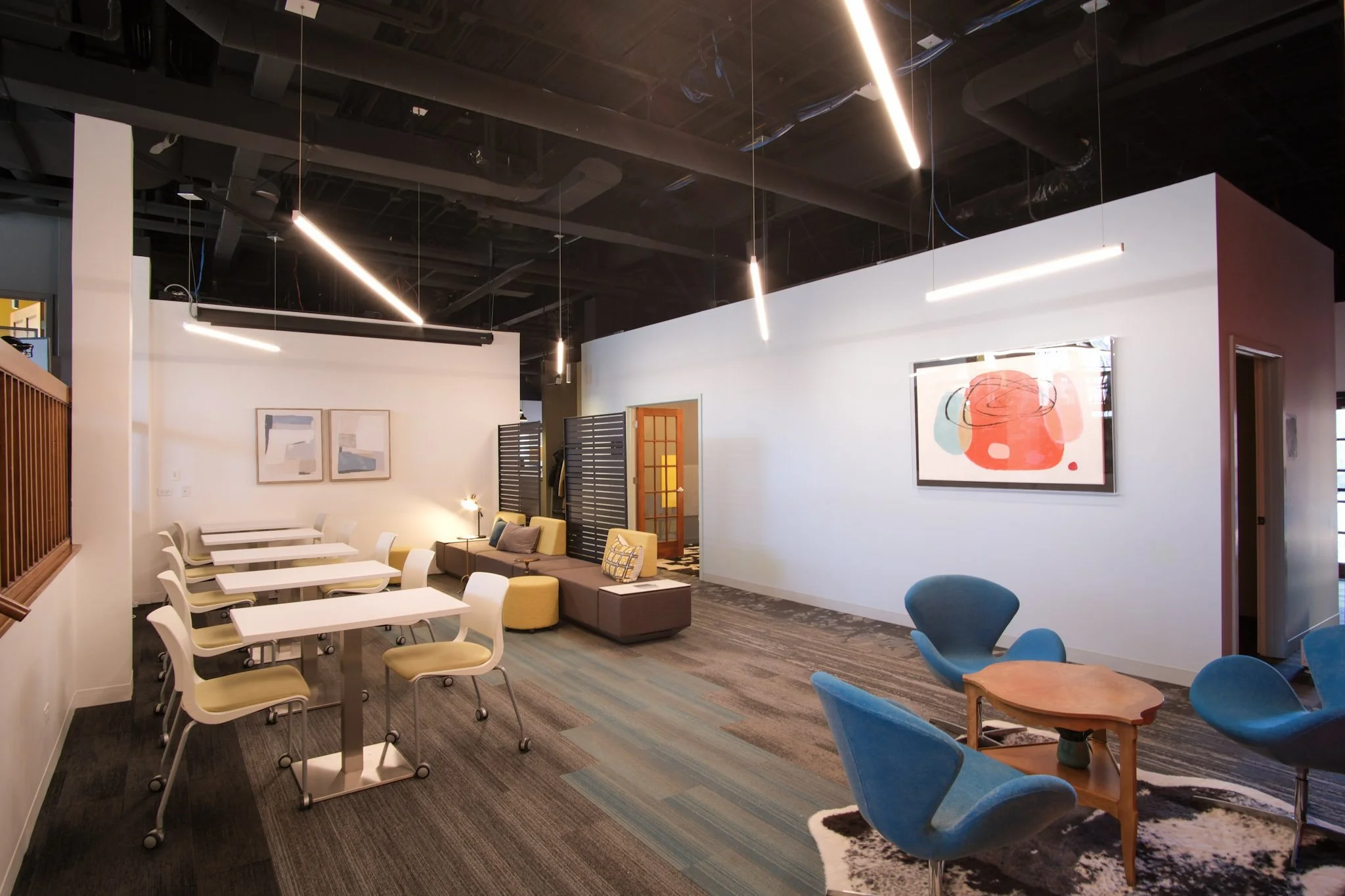
“When you watch how people move through a space and where they choose to sit, you get real insight into what’s working. That’s research.”
-Mara Hauser on collaborative vs. private spaces
How do you balance aesthetics with function in a coworking space?
You really can’t have one without the other. Everything needs to feel cohesive and intentional, but flexibility is essential. For example, the individual tables can easily be pushed together for group work and then separated again when needed. That adaptability is a big part of what makes a space functional.
From an aesthetic standpoint, we stayed true to the 25N brand with clean lines, white furniture, and thoughtful pops of color. We added pillows, plants, and artwork to warm things up and make the space feel more comfortable and welcoming.
We’re always thinking about innovative design paired with operational excellence, while supporting the joyful workdays 25N is known for. Bright, flexible, and well-considered spaces help make that possible.
If a member wanted to give their own workspace a mini refresh, what would you suggest?
Start by asking what’s working and what isn’t. What feels easy? What do you wish could be different?
Small changes can have a big impact. Try rearranging furniture, changing the orientation of your desk, or adding a side chair. Updating artwork or lighting can completely shift how a space feels. Plants are always a great addition. They bring warmth, color, and dimension, and they simply make people feel better in a space.
And of course, Workplace Studio is always available to help members take a fresh look at their workspace, whether they’re focused on function, aesthetics, or both.