
Rethinking the Business Meeting Room: What Today’s Teams Actually Need
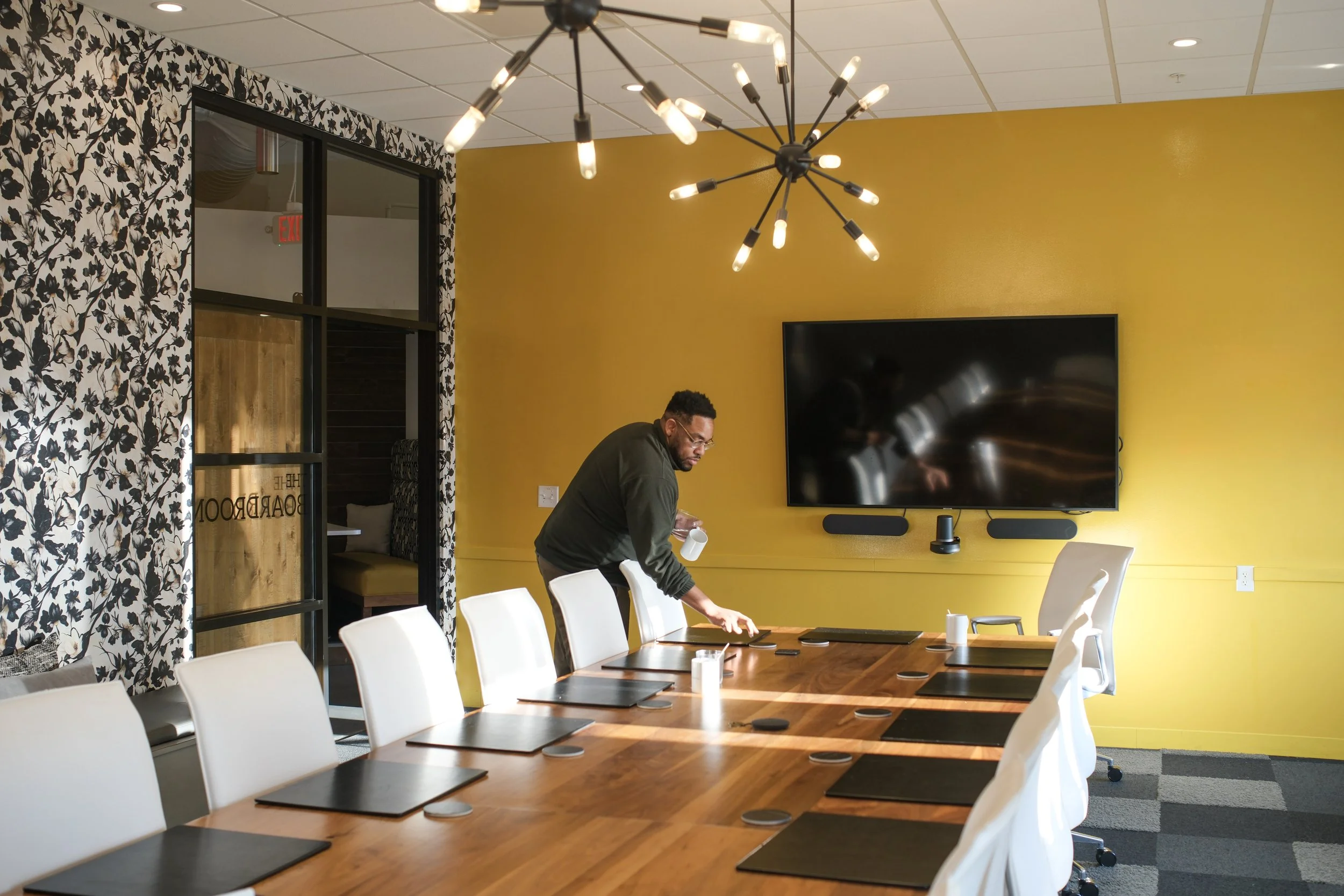
Search for “meeting room in [city]” and you’ll likely see the same types of results: hotel conference centers, large event venues, and shared workspaces designed a decade+ ago. Many of them technically solve the problem of space. But they were built for a different era of work.
Today’s teams are hybrid. They are brand-conscious. They are outcome-focused. They do not just need four walls, a table, and a projector. They need an environment that supports momentum, creativity, credibility, and connection.
Why Most Meeting Room Options Feel Dated and Transactional
Traditional venues were designed around volume and standardization. Hotel ballrooms prioritize flexibility for weddings and conferences. Conference centers optimize for large groups and preset packages. Older coworking spaces often focus on density rather than design.
The result is predictable: beige walls, limited natural light, generic artwork, and technology that may or may not work when you need it most.
These spaces often feel transactional. You book a room. You receive a keycard. You are left to manage everything else. Often, little thought is given to how the space makes people feel. There is minimal personalization, and support is reactive rather than proactive. If something goes wrong, you may be waiting on a front desk or calling down to a service line.
For organizations that care about brand perception, team morale, or high-stakes client interactions, that model falls short.
How Modern Teams Actually Use Meeting Space Today
When someone books a meeting room today, they are rarely just looking for a place to sit.
For some, the goal is external. They are hosting clients, investors, or partners. The room becomes an extension of their brand. It must communicate credibility, professionalism, and sophistication. The environment should reinforce their message, not distract from it.
For others, the goal is internal. Teams gathering for offsite strategy sessions or planning meetings want more than productivity. They want energy. They want inspiration. They want the experience to feel different from their day-to-day routine.
In both cases, the meeting room is about outcomes:
Generating better ideas
Strengthening relationships
Making confident decisions
Impressing stakeholders
Creating alignment
A room that feels uninspired or logistically frustrating works against those goals.
The Impact of Design, Technology, and Hospitality on Outcomes
The most effective meeting environments are intentional in three core areas: design, technology, and hospitality.
Design That Feels Human and High-Performance
A well-designed meeting room strikes a balance between comfort and capability. At 25N, the in-house design team at Workplace Studio delivers what they describe as a “warm contemporary” aesthetic. It bridges the gap between a comfortable living room and a high-performance office.
Textiles soften the space. Localized artwork adds personality. Natural light enhances focus and energy. The room feels inviting without sacrificing professionalism.
This matters more than many organizations realize. When people feel comfortable and inspired, they contribute more openly. Conversations flow more naturally. Creative thinking improves. The space becomes part of the meeting’s success rather than a neutral backdrop.
Compare that to a windowless conference room with fluorescent lighting and generic decor. The difference in mood and engagement is immediate.
Technology That Works Without Drama
Nothing kills momentum faster than a monitor that will not connect.
Modern meetings are often hybrid. Key stakeholders may be remote. Clients may join from another state. If technology falters, it creates friction, delays, and unnecessary stress.
Technology readiness is not a luxury. It is foundational.
A modern meeting room should offer reliable display connections, seamless screen sharing, and hybrid-friendly setups that ensure remote participants do not feel like second-class attendees. When everyone can see, hear, and contribute clearly, meetings move faster and decisions come easier.
The best environments also offer immediate, on-site assistance. Instead of troubleshooting cables on your own, you have someone physically present to help solve issues before they escalate.
Hospitality That Removes Friction
Design and technology set the stage. Hospitality elevates the experience.
In many traditional venues, service is reactive. You check in. You find your room. If you need something, you make a call.
In a hospitality-driven environment, support is anticipatory.
At 25N, guests are greeted and personally walked to their meeting room. Staff check that monitor connections are working before the meeting begins. Coffee can be refreshed at the halfway point without being asked. Recommendations for nearby restaurants are readily available. The experience is hands-on in the best way.
This approach reflects a Workspace-as-a-Service mindset. The team recognizes that the person hosting the meeting wants to focus on outcomes, not logistics. By removing clutter and friction, they help the host look polished and prepared.
It is not just about convenience. It is about confidence.
What to Look for in a Truly Modern Meeting Room
If you are evaluating meeting rooms in your city, look beyond square footage and hourly rates. Ask deeper questions.
Does the space reflect your brand?
If you are hosting clients, does the environment feel aligned with your standards? Does it create an impressive first impression?
Is the design intentional?
Are there elements that make the room feel energized and inspiring, or does it feel generic and interchangeable?
Is the technology hybrid-ready?
Can remote participants fully engage? Is there on-site support if something goes wrong?
Is the experience supported by people?
Will someone greet your guests? Can you rely on staff to anticipate needs, assist with catering, and solve issues in real time?
Is there flexibility in size and layout?
Modern teams fluctuate. One day you may need a four-person huddle room for a quick sprint session. The next, a twenty-person training room for an all-hands meeting. A flexible environment allows you to right-size your space without overpaying for empty chairs or cavernous ballrooms.
Is booking simple and transparent?
Rigid contracts and inflexible policies belong to an older model of work. Today’s organizations benefit from spaces that adapt as quickly as they do.
When these elements align, the meeting room becomes an asset rather than an expense.
The Argument: Hospitality-Driven Spaces Outperform Traditional Venues
Hybrid and remote teams are constantly shifting. Attendance changes. Project needs evolve. Being able to move between different room sizes and configurations without long-term commitments enables smarter budgeting and better planning.
Instead of locking into a rigid arrangement, organizations can match space to purpose. A small brainstorming session can take place in an intimate setting that encourages collaboration. A larger training session can unfold in a room designed for presentation and interaction.
Hospitality amplifies that flexibility.
On-site support transforms the meeting from a rental transaction into a curated experience. When staff anticipate needs, troubleshoot technology instantly, and assist with setup or catering, the meeting host is free to lead.
The feedback often reflects this difference. Guests describe the team as incredibly helpful. They mention feeling taken care of. They comment on the beautiful space and impressive atmosphere. These details shape perception and leave a lasting impression.
Certain types of meetings benefit especially from this environment:
Client-facing presentations where credibility matters
Strategic offsites that require creative thinking
Investor or stakeholder meetings where professionalism is critical
Training sessions that need reliable technology and adaptable layouts
Team gatherings that aim to feel energizing and rewarding
When the vibe matters as much as the content, the environment is not secondary. It is essential.
As teams continue to embrace hybrid work and fluid organizational structures, expectations around space will continue to rise. Decision-makers are looking for environments that reflect their standards, support their technology needs, and deliver an experience that feels elevated rather than transactional.
In that context, choosing a meeting room is not just about availability or price. It is about alignment.
When design is intentional, technology is seamless, hospitality is proactive, and flexibility is built in, the meeting space does more than host conversation. It enhances it.
For organizations that value experience and outcomes, that difference is not subtle. It is strategic.