Furnished Offices vs Vacant Space: What Growing Teams Should Consider
For decades, leasing a vacant office was the default path for growing businesses. Find a building, negotiate a rate per square foot, sign a multi-year lease, and build the workspace from scratch. It was seen as a milestone and a symbol of legitimacy.
Today, that assumption deserves a second look.
Work has changed. Teams are hybrid. Growth is less predictable. Speed matters more than ever. And the true cost of “having your own space” is often far more complex than the base rent suggests.
For growing teams, the real question is no longer “Can we afford an office?” It is “What kind of office model supports our growth without slowing us down?”
Why the Traditional Vacant Office Model Is Losing Relevance
The traditional vacant office lease is built on long timelines and long commitments. Three- to five-year terms. Tenant improvement negotiations. Construction schedules. Utility contracts. Vendor coordination.
That structure made sense when teams were stable and predictable. But many modern businesses operate very differently. Headcount shifts. Departments reorganize. Hybrid policies evolve. Leaders need flexibility over rigidity.
There are also common misconceptions that lead companies toward vacant space prematurely.
The first is the price per square foot trap. Businesses compare rent on a spreadsheet and assume the lowest base rate is the smartest decision. But “vacant” truly means empty. No desks. No internet. No coffee. No cleaning. No community infrastructure. Turning that shell into a functional workspace requires time, capital, and management attention.
The second is the “got to have my own door” mindset. Some leaders believe that a dedicated storefront is the only way to project legitimacy. In reality, there are more flexible, less burdensome ways to create a polished, professional presence without signing a multi-year lease and managing an entire facility.
The third is underestimating operational complexity. Managing an office may sound straightforward. In practice, it becomes a second job. For founders and fast-moving teams, that distraction can dilute focus from the actual business.
The True Costs Beyond Rent in a Vacant Office Lease
Base rent is only the beginning.
Growing teams often underestimate the hidden or variable costs tied to a traditional lease:
Unused Space
Hybrid teams are especially vulnerable here. You may lease space for 25 people, but on any given day only 15 are present. You are paying for empty chairs and unused square footage.
Buildout and Customization
Need to knock down a wall? Add a dedicated conference room? Upgrade lighting? Even modest tenant improvements require coordination, contractor timelines, and significant capital. And those changes may not align with future needs if the business shifts direction.
Operational Overhead
Beyond rent, traditional leases often include CAM charges, property taxes, utilities, commercial-grade internet contracts, janitorial services, security systems, and insurance requirements. Each vendor requires research, negotiation, and ongoing management.
Time Cost
Perhaps the most overlooked expense is leadership attention. Every hour spent coordinating internet installation, meeting with contractors, or resolving facility issues is an hour not spent on revenue, strategy, or team development.
When you account for these factors, the seemingly lower cost per square foot can become far less compelling.
How Furnished Private Offices Reduce Friction and Risk
A furnished private office shifts the model entirely.
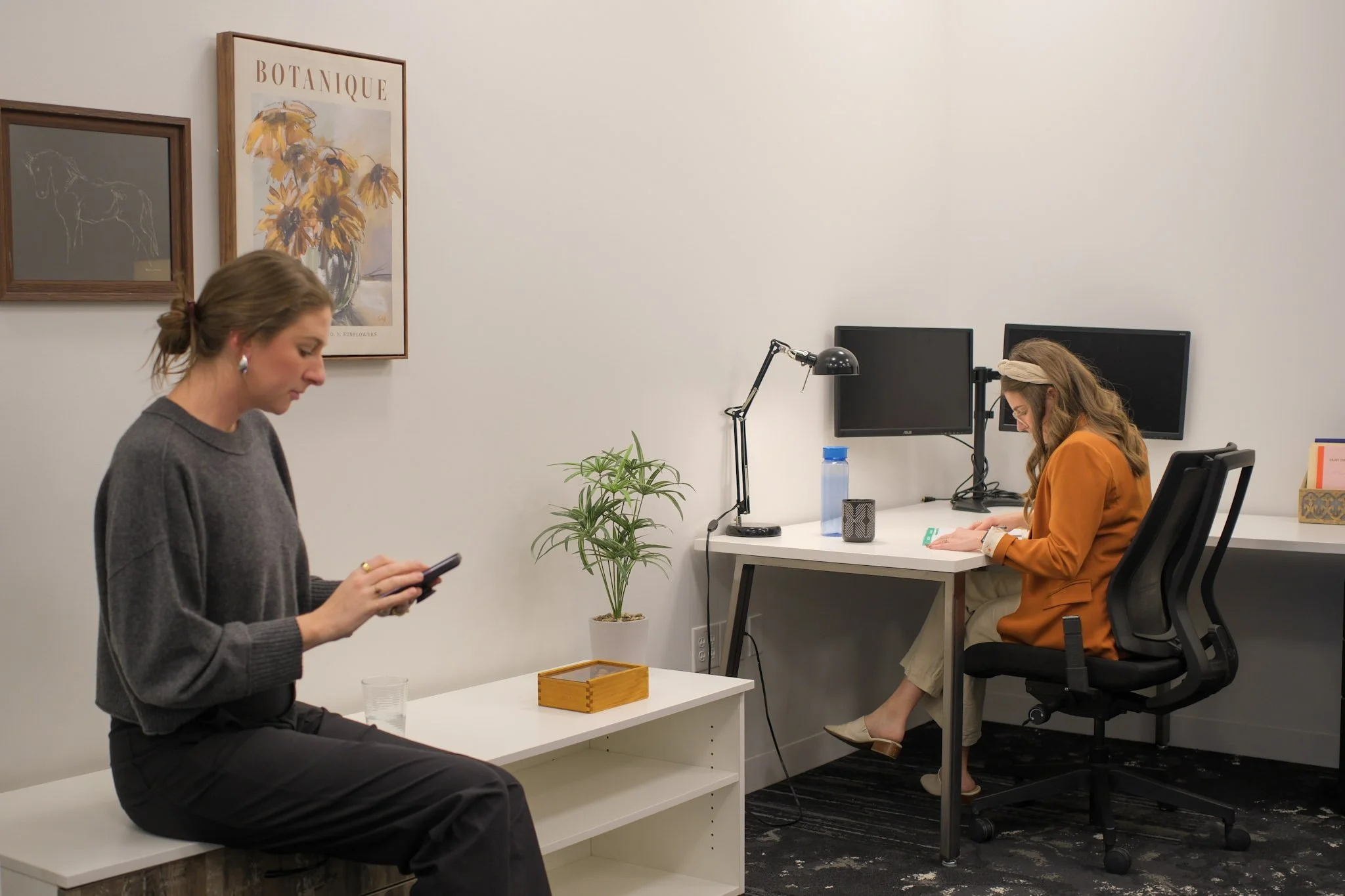
Instead of starting with an empty shell, teams move into a fully operational workspace. The desks are in place. The internet works. The coffee is ready. Cleaning and maintenance are handled.
For a growth-focused leader, that difference is profound.
There is no multi-week buildout, vendor scramble, or productivity dip during setup. Teams can move in and be fully operational on Day 1.
For enterprise leaders who need to keep their teams focused, or scale-up owners managing rapid change, this low-friction environment protects momentum. Instead of managing logistics, they get to lead people and drive outcomes.
Risk is also reduced. Without a long-term lease commitment, businesses are not locked into square footage that may become too large or too small. They can adapt as real-world needs evolve.
Flexibility as a Competitive Advantage for Growing Teams
Flexibility represents strategic leverage.
Short-term agreements such as month-to-month or six-month terms allow organizations to scale up or down without penalty. Upgrade to a team suite as you hire. Shift to flex desks during a seasonal slowdown. Increase meeting room hours for a product launch or training cycle.
This agility enables smarter decision-making.
Leaders can hire with confidence, knowing their office footprint can adjust. They can experiment with hybrid policies without being anchored to a fixed layout. They can expand into new markets with less capital risk.
In contrast, a long-term lease assumes predictability. It assumes you know exactly what your team will look like three years from now. For many businesses, that assumption no longer holds.
Who Benefits Most from Furnished Private Office Solutions?
While furnished offices can serve a wide range of businesses, certain profiles see particular value.
Rapid Scalers
Companies growing quickly often cannot forecast headcount years in advance. Locking into a multi-year lease can either constrain growth or create costly excess space. A furnished private office allows them to match space to momentum.
Satellite or Hub-and-Spoke Teams
Corporate organizations expanding into suburban markets or supporting distributed teams need professional hubs without the overhead of a full branch office. A furnished office provides brand presence, meeting space, and infrastructure without duplicating administrative burden.
Solo Professionals and Small Firms
Consultants, advisors, and founders who want to step out of the home office environment benefit from a private, professional setting. They gain credibility and focus without the expense and distraction of building their own office from scratch. They also tap into the networking energy of a shared workspace community.
Hybrid Teams
Teams that gather in person a few days per week do not need a desk for every employee every day. Renting a right-sized private office for core staff and using flex memberships or meeting rooms for rotating team members creates cost efficiency and cultural cohesion.
Why a Professionally Managed Environment Matters
Beyond furniture and internet, management quality shapes the experience.
A professionally operated environment becomes a polished extension of your company. From the reception experience to shared spaces, the setting reinforces credibility with clients and partners.
It also restores leadership focus.
When office management is outsourced to a capable, hospitality-driven team, leaders are freed from troubleshooting printers, coordinating cleaning crews, or reviewing utility invoices. That regained attention can be redirected toward hiring, product development, customer relationships, and strategy.
The feedback from members who transition from vacant offices to a furnished environment often reflects relief.
“It just works.”
There is no landlord negotiation. No surprise utility bill. No managing multiple service providers.
“I connect with so many people here.”
Beyond operational ease, many discover the added value of community. Informal conversations in shared spaces can lead to partnerships, referrals, and fresh ideas.
These benefits are difficult to quantify in a lease comparison, but they influence daily experience and long-term growth.
Furnished Offices and the Hybrid Future
Hybrid work is not a temporary trend. It is an evolving norm.
In this environment, the concept of one desk per employee is outdated. Teams need a central, professional hub that fosters culture and collaboration without duplicating every resource for every individual.
A furnished private office supports this model by providing:
A consistent gathering space for core team members
Access to meeting rooms for collaboration-heavy days
Flexibility for remote workers who need occasional in-person workspace
A professional address and reception presence
This structure combats the isolation of remote work while avoiding the financial drag of oversized leases.
It also preserves optionality. As hybrid policies evolve, the workspace can evolve with them.
Making a Smarter Office Decision
Leasing a vacant office is not inherently wrong. For some organizations with stable headcounts, predictable growth, and in-house operational capacity, it may still make sense.
But for many growing teams, the decision deserves a deeper analysis.
Look beyond rent per square foot. Evaluate total cost of ownership. Consider the value of speed to productivity. Factor in leadership focus and operational simplicity. Assess how flexibility might influence hiring, expansion, and strategic pivots.
A furnished private office is not just about convenience. It is about aligning your workspace model with how modern businesses actually operate.
For leaders who prioritize agility, focus, and credibility, that alignment can become a meaningful competitive advantage.
In the end, the right office is not simply the one you can afford. It is the one that supports your growth without becoming another thing to manage.